

Case study #1:

EdOps Chrome Plugin for Hamlet
In my work as Chief of Staff, Growth & Development, this innovative project successfully achieved its goals and gained strong internal support from Hamlet’s Editorial Operations team. They were responsible for ingesting public government meeting videos into Hamlet’s database, the raw pipeline that powered the entire product. However the manual process was creating a serious bottleneck at scale.

Hamlet is an AI-powered, nationwide civic intelligence platform that transcribes, indexes, and enables searches across thousands of local government meetings to track policy changes. The platform provides targeted alerts for developments, zoning, and project approvals to professionals in real estate, development, and public affairs.
Customers needed to find what was said, without watching hours of footage to get there. In today’s fast-paced world, where time is of the essence, the ability to quickly access key information is more crucial than ever. With overwhelming amounts of content available, viewers often feel lost sifting through endless hours of municipal meeting videos to find specific moments that matter to them. This demand necessitates innovative solutions that can streamline the process, providing users with efficient tools that allow them to pinpoint relevant sections without the frustration of extensive searching.
Case study #1:
Search v2 for Hamlet
In my work as Chief of Staff, Growth & Development, this innovative project successfully achieved its goals and gained strong customer support, demonstrating its effectiveness in addressing the needs of its target audience. Semantic search would turn a passive meeting archive into a daily-use intelligence tool and unlock retention and expansion but a multi-API integration strategy (12Labs + OpenAI) had to be fast enough to feel useful and stable enough to test.

Hamlet is an AI-powered, nationwide civic intelligence platform that transcribes, indexes, and enables searches across thousands of local government meetings to track policy changes. The platform provides targeted alerts for developments, zoning, and project approvals to professionals in real estate, development, and public affairs.
Customers needed to find what was said, without watching hours of footage to get there. In today’s fast-paced world, where time is of the essence, the ability to quickly access key information is more crucial than ever. With overwhelming amounts of content available, viewers often feel lost sifting through endless hours of municipal meeting videos to find specific moments that matter to them. This demand necessitates innovative solutions that can streamline the process, providing users with efficient tools that allow them to pinpoint relevant sections without the frustration of extensive searching.

Case study #2:
Milestones at Aurora Solar
This innovative work successfully achieved its goals and gained strong customer support, demonstrating its effectiveness in addressing the needs of its target audience. The thoughtful design and implementation strategies not only captured the attention of customers but also encouraged them to engage actively with early versions of Milestones, leading to fast feedback loops, and quick iterations which resulted in remarkable impact.
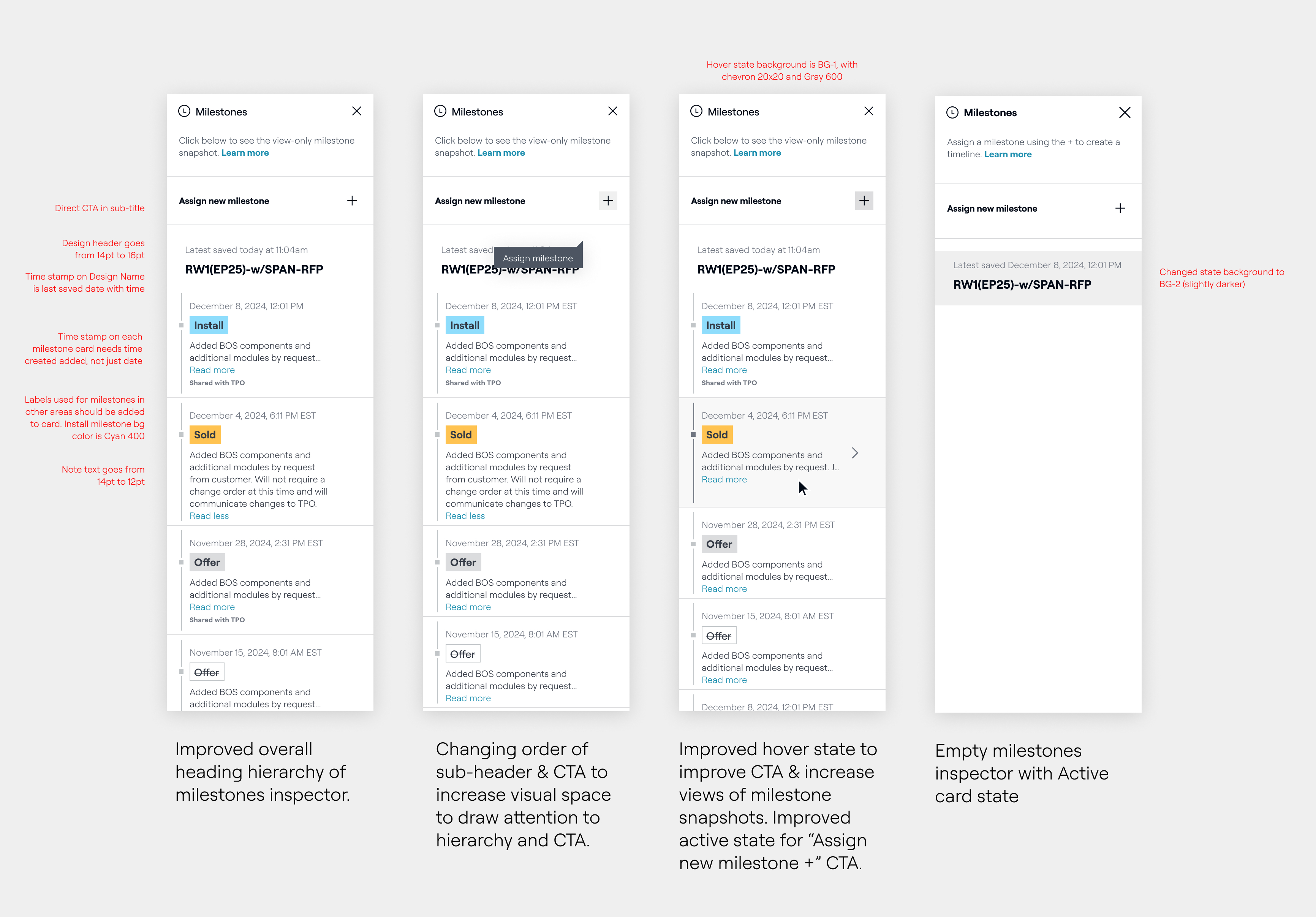
A milestone is a significant moment in a solar project worth memorializing, serving as a key point of reference in the design process. We built this feature 0-1 which allowed our customers to mark a design with a milestone, providing them with a comprehensive toolset to enhance their workflow. This capability enables them to 1) quickly understand the evolution of a design, as they can track changes and improvements over time, 2) decide which design to open among multiple options before editing, ensuring that they select the most suitable iteration for their needs, and 3) save a permanent, secure source of truth for what the design looked at the point at which the milestone was created, thereby fostering better communication among team members and ensuring that everyone is aligned on the project’s progression. By implementing milestones, we empower our users to navigate their projects with greater confidence and efficiency.
Case study #3:
Aurora Solar’s acquisition & integration of Lyra.
The story of how we carefully evaluated a promising start-up before its acquisition, making sure their business model fit with our long-term goals, integrated a minimum viable product (MVP) offering into our existing infrastructure, and created a clear vision for the value the products would deliver together, highlighting the synergy that would foster innovation and growth. This process included detailed assessments, team brainstorming sessions, and strategic planning to enhance the new offerings, ultimately leading to a clearer value proposition and a well-aligned roadmap.
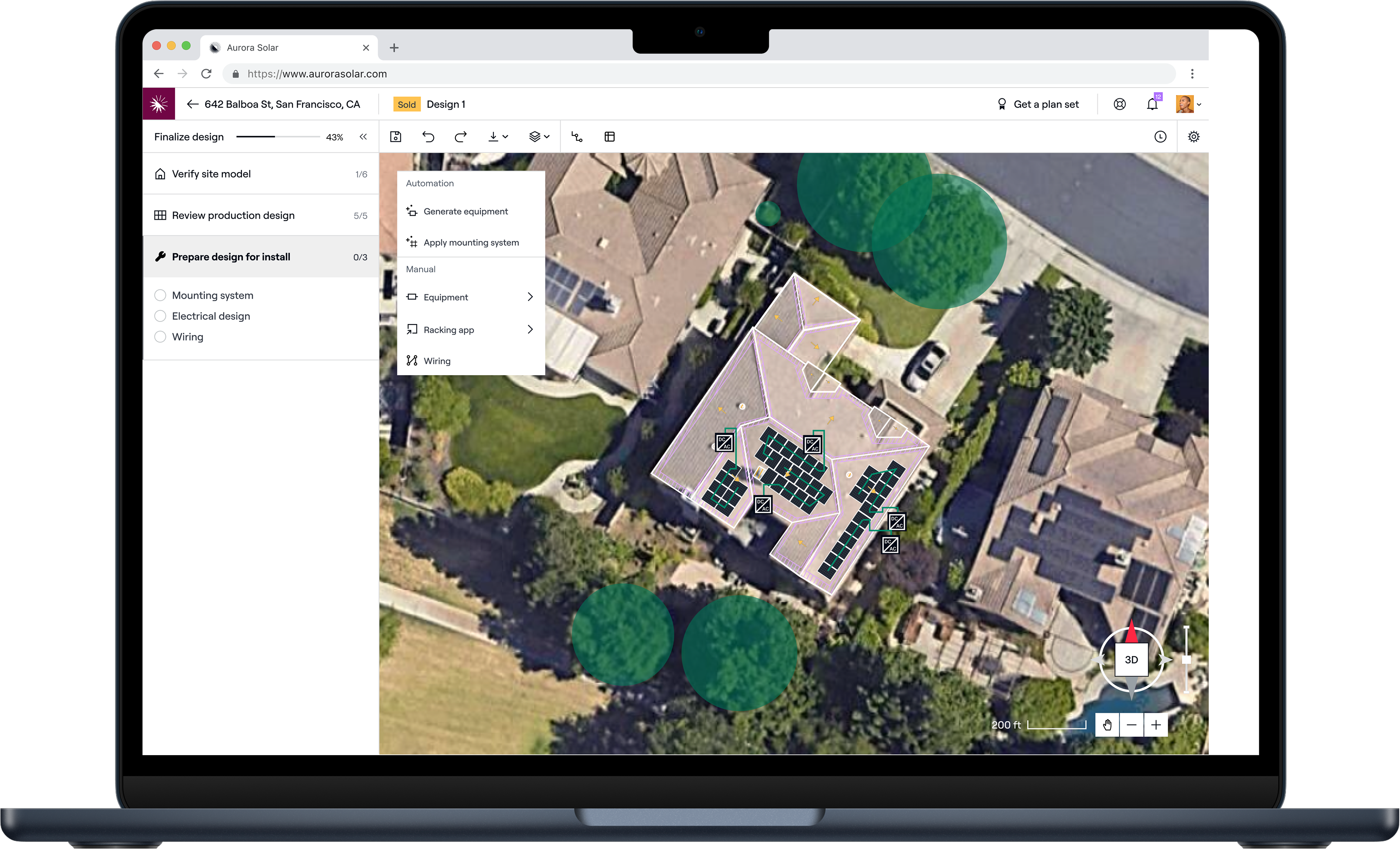
During my first two years at Aurora Solar, the company faced numerous challenges in developing a custom tool for producing a viable Plan Set; specifically, we aimed to generate 6 to 8 pages of detailed documentation extracted from an intricate electrical 3D CAD drawing. Initially, we believed that creating this tool in-house would leverage our existing technological expertise while tailoring it to our specific needs; however, as the project unfolded, we encountered significant technical difficulties that impeded progress and increased the complexity of the task. Furthermore, the extensive amount of time and resources required to update back-end data models became a major hurdle that strained our timelines and productivity. After considerable deliberation and analysis of our options, Aurora ultimately made the strategic decision to acquire a small startup, Lyra, instead. Lyra was an ideal candidate, as it already had the product offering we desperately needed, which not only streamlined our operations but also allowed us to refocus our efforts on other innovative projects within the company.

Case study #4:
Launching Mailchimp’s first small-biz CRM
Mailchimp is a marketing platform, primarily known for email marketing services, which helps small businesses manage and connect with their audience through various channels.
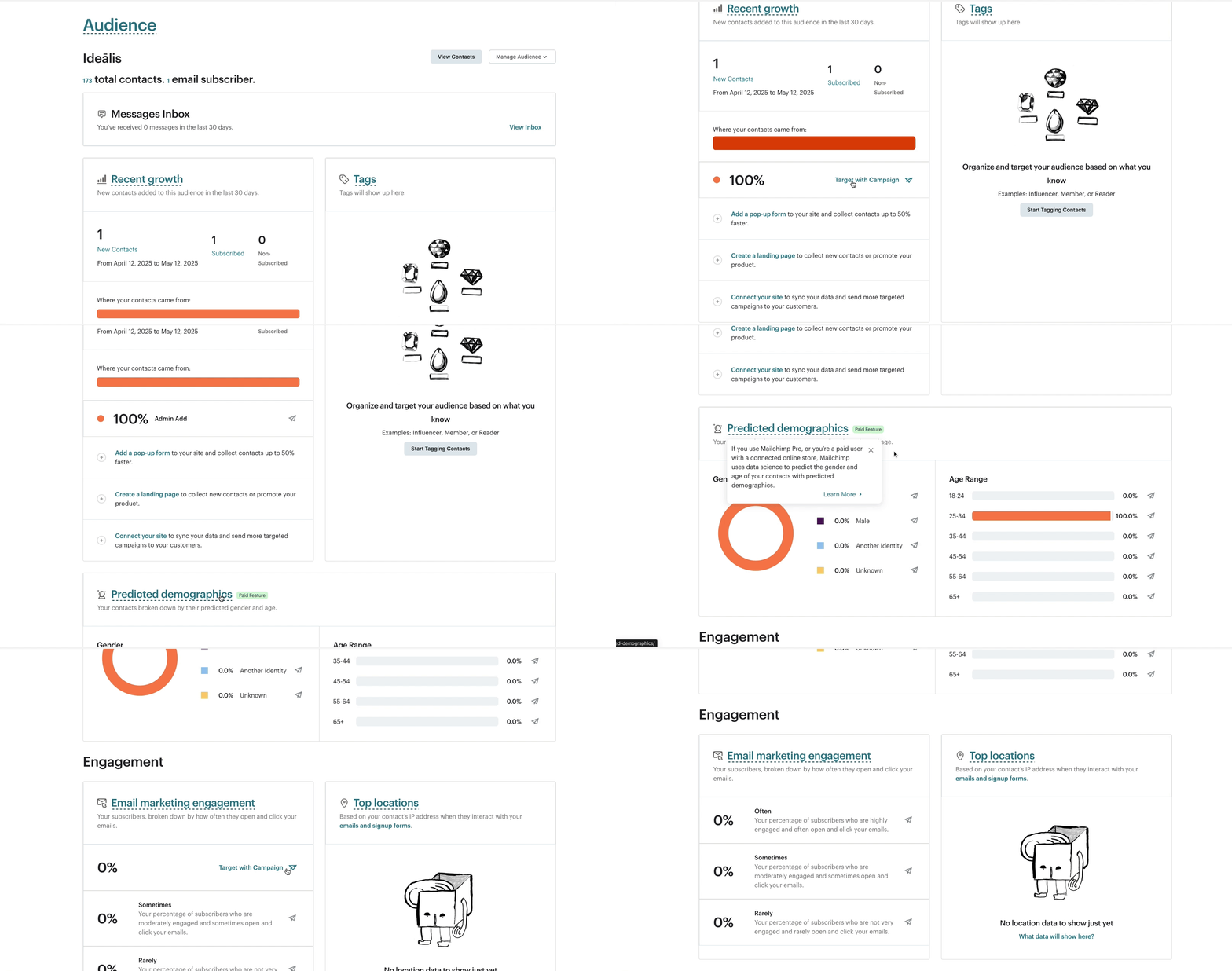
This case study showcases how I led a talented team of 6 designers through the comprehensive and strategic transformation of Mailchimp into a highly efficient small-business Customer Relationship Management platform. In doing so, I also needed to partner with over 70 cross-functional peers, including developers, product managers, and marketing specialists, to turn complex data into actionable insights that would resonate with our target audience. Through the diligent use of strategic experimentation, iterative testing, and a strong focus on customer-centric decision making, I played a pivotal role in guiding the product from conception to market launch. This involved not only aligning our design philosophy with business objectives but also ensuring that our solutions were tailored to meet the unique needs of small businesses, thus enhancing user engagement and satisfaction in the process.

