

Aurora Solar
is a company that develops cloud-based software for solar design, sales, and delivery. The company’s software streamlines the process of designing and selling solar projects, making it easier for solar professionals working for solar installation companies to provide accurate and customized designs for customers (homeowners).
Lyra acquisition & product integration
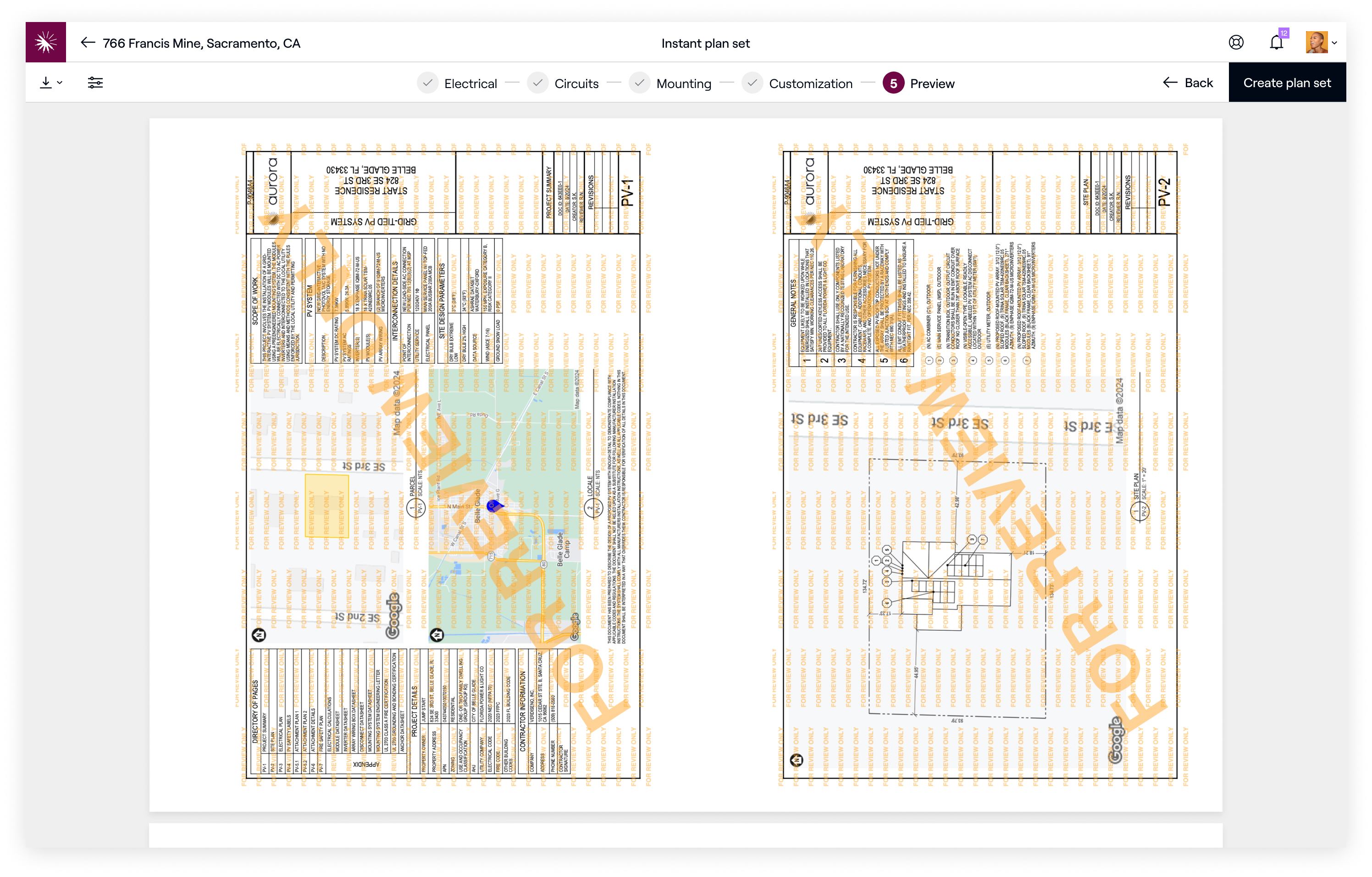
During my first two years at Aurora, the company struggled to create a bespoke tool which could output the necessary 8-page document from an electrical 3D CAD drawing (called a Plan Set), because of the deep technical complexity and time needed to build and restructure back-end systems. Rather than continue to try and build this functionality themselves, they opted to acquire a small, 10-person startup who had already created what we needed.
In addition, as AHJs (Authorities Having Jurisdiction) increasingly rejected our customer’s plan sets, accuracy and efficiency became even more crucial. Aurora’s Instant Plan Sets offering, an MVP built from a Lyra integration, stood on a foundation of technology approved by thousands of AHJs, streamline the permitting process by generating a code-compliant permit package in minutes.
Opportunity overview
🤔
Customer opportunity
The solar permitting process can be challenging for homeowners and installers alike. Complex regulations from Authority Having Jurisdictions (AHJs) and the solar industry’s heavy reliance on manual data entry contribute to significant delays — and ultimately costs — to solar installations.
🔥
Business opportunity
Integrating Lyra into the Aurora Solar platform will help alleviate these challenges by providing instant, permit-ready proposals, backed by Aurora’s industry-leading accuracy. The integration will empower solar installers to deliver projects faster, with lower costs, to enable more solar installations.
🏔
Challenges
Aurora had struggled with integrating acquisition products and teams in the past, creating challenges for their growth. To overcome these issues, the company is now focusing on learning from past mistakes and developing a clearer and more efficient integration process to ensure successful transitions in future acquisitions.
😱
Risks
The problems from past integration experiences showed the challenges of combining different company cultures and processes, raising doubts among stakeholders about Aurora’s ability to handle future acquisitions. We understood that thorough due diligence for better decision-making and stakeholder management would be crucial.
We set goals & KPIs
🤲🏽 People
Integrating the Lyra team’s culture into Aurora and ensuring their involvement in decision-making was a key focus, as this collaboration fostered a sense of unity and shared purpose. By actively incorporating their values and practices into the broader organizational framework, we not only enhanced team morale but also encouraged innovative ideas and diverse perspectives.
✂️ Process
We established clear and comprehensive goals for our research, discovery, decision-making, and delivery process regarding the acquisition to ensure that every team member understood their role and responsibilities. This structured approach included detailed timelines and milestones, which enabled us to track progress effectively.
💻 Product
We set clear KPIs and high-level OKRs for the product integration and the creation of the “Instant Plan Set” (MVP) within the existing Aurora product. Our comprehensive approach ultimately aimed to deliver a robust product that not only meets, but exceeds, the needs of our target audience, fostering greater engagement and satisfaction.
The acquisition ‘tiger team’
The appointed acquisition team was made up of many people across the organization, representing various departments and expertise that enabled them to approach the task from multiple angles. Each member brought unique skills and perspectives, fostering a collaborative environment where ideas could flourish. This diverse group was carefully selected to ensure that all aspects of the acquisition process were covered, from finance and legal considerations to marketing strategies and operational integration. By harnessing the collective knowledge and experience of the team, the organization aimed to execute a seamless and successful acquisition that aligned with its long-term strategic goals.

Olivia
Staff Product Manager (Aurora Solar)

Nadia
Lead Product Designer (Aurora Solar)

Mariesa
Senior Design Manager & Lead Due Diligence Researcher (Aurora Solar)

Derek
Founder & President (Lyra)

Kyle
Director of Global Partnerships & Corporate Development (Aurora Solar)

+ 15
collaborators, SMEs, and stakeholders from Lyra & Aurora Solar
Aligning on MVP integration
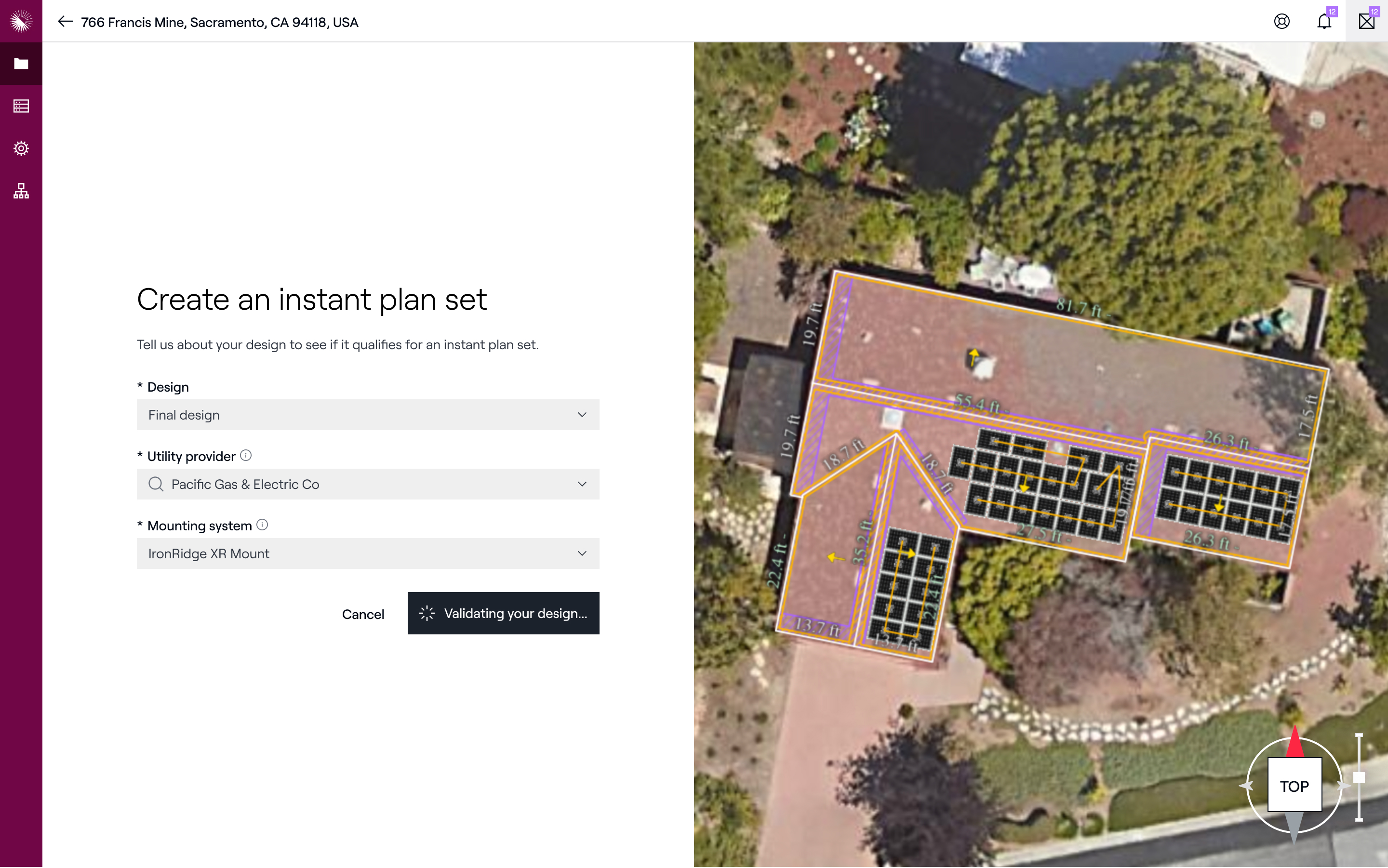
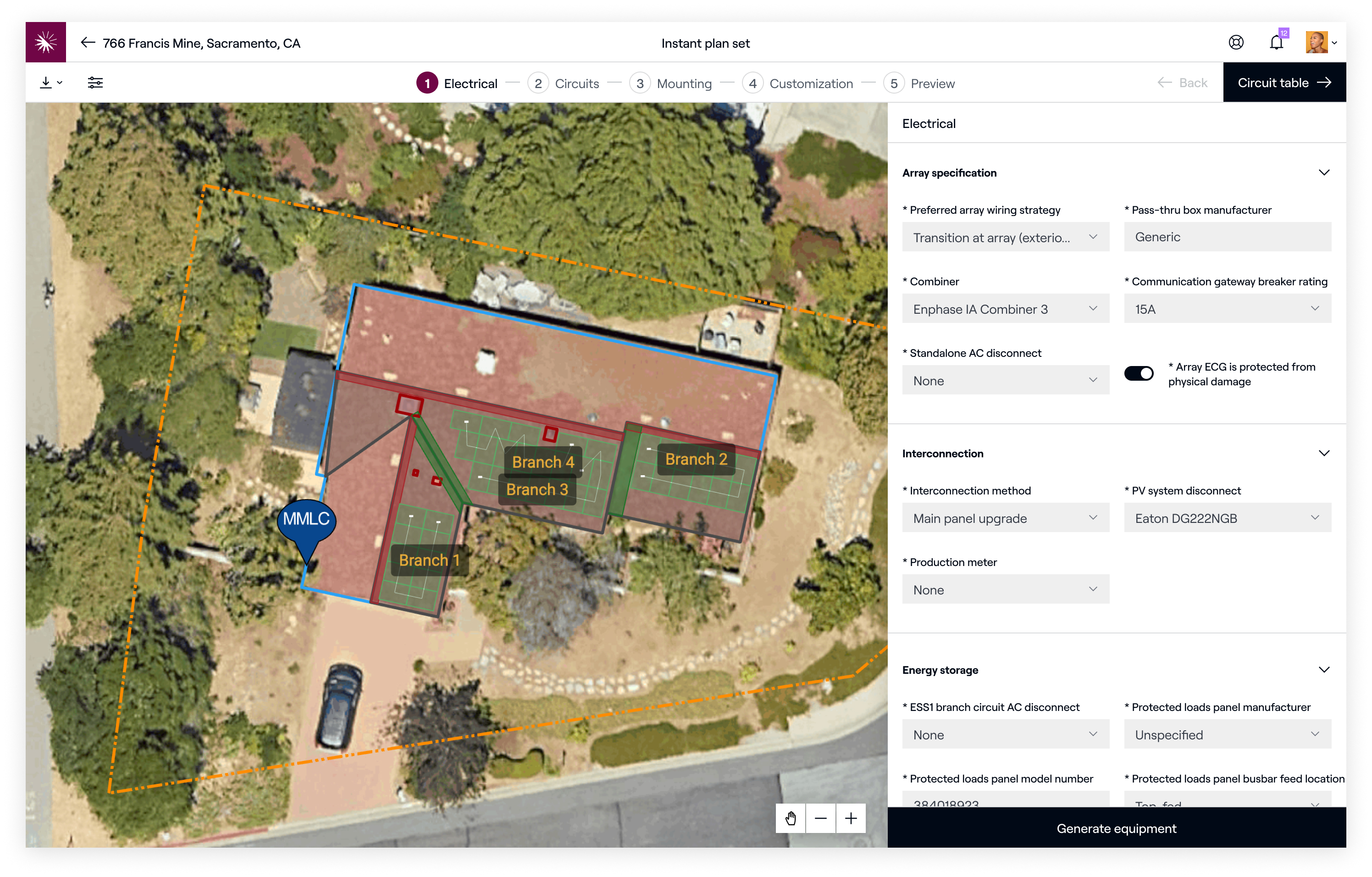
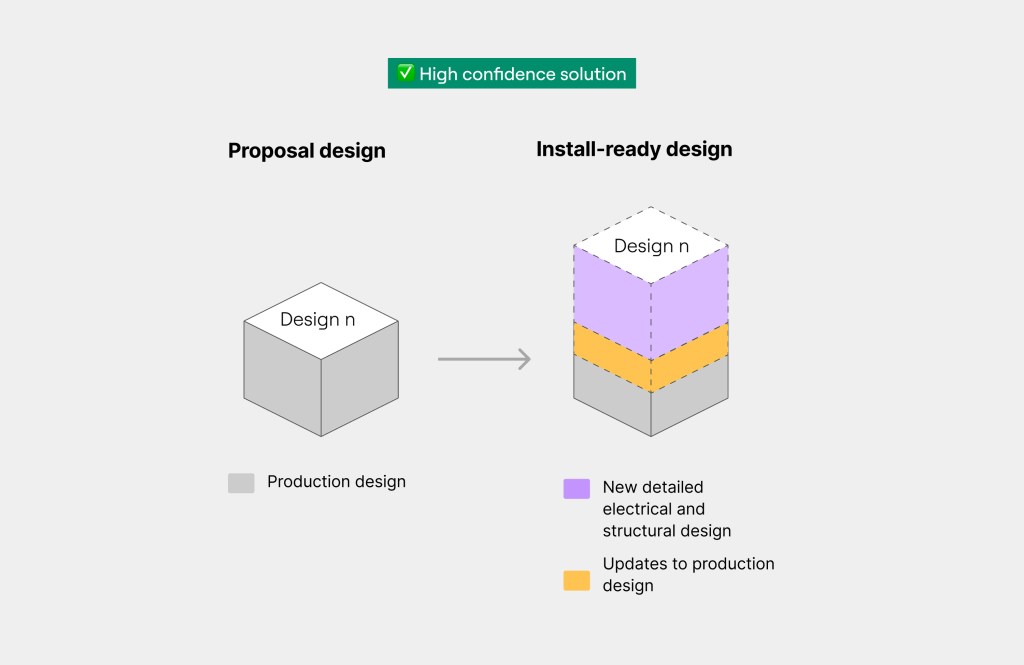
Aurora was optimized for sales workflows and “production” design, not detailed electrical and structural installation requirements, like Lyra. The challenge we had to navigate was reconciling those fundamental differences in UX & data structure.
- Aurora only captured a fraction of the information necessary for an install
- Aurora lacked depth of control needed to support varied, complex installation scenarios
- Aurora offered limited built-in guidance, leaving users responsible for ensuring accuracy
Design strategy & team guidance
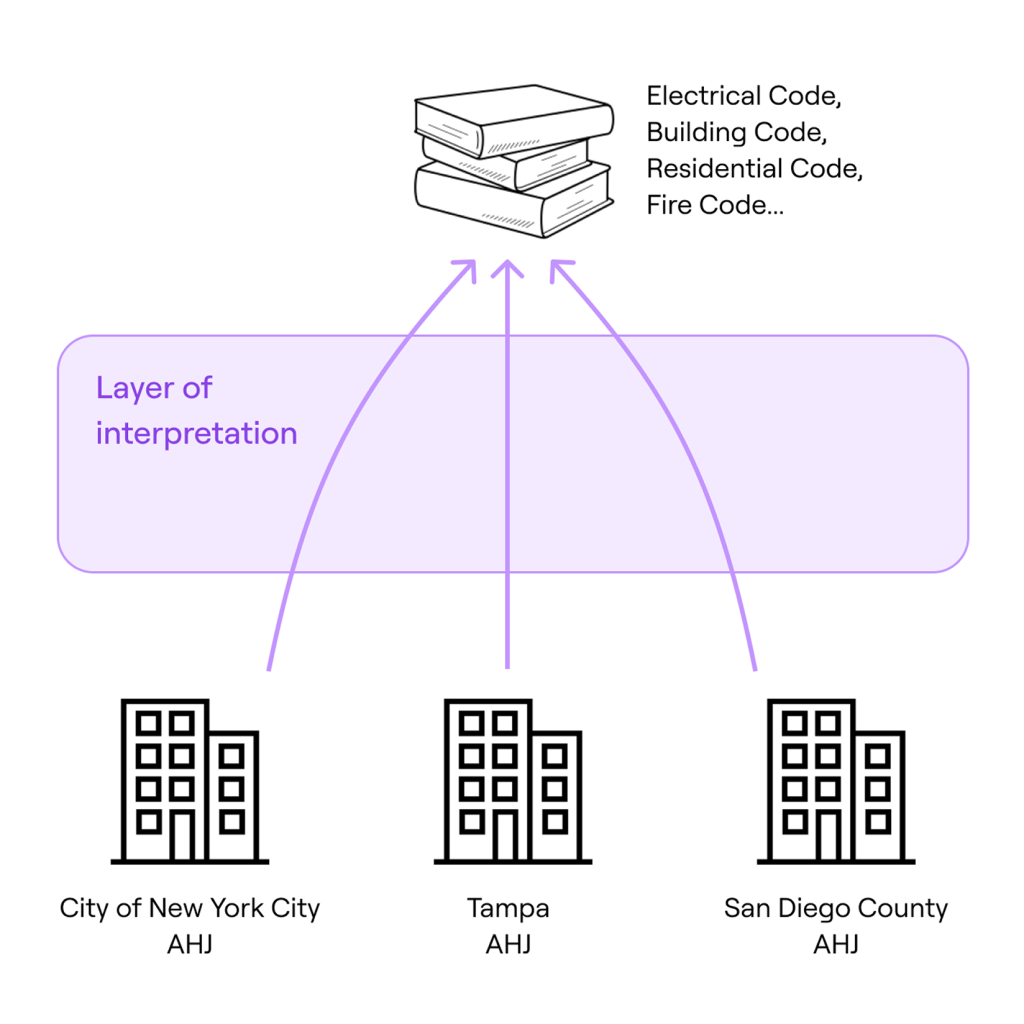
Combining two tools well is no easy feat for a product development team. We needed to combine two fundamentally different applications, plus ensure we were also aligning outputs with regulatory codes which the plan set output would also need to adhere to.
🏔 Coming together cross-functionally to understand the full scope of all “requirements”
The CAD design needed to be “complete” with a basic amount of data, ensuring every detail was covered. It had to be “installable,” meaning the equipment should fit well and integrate easily into existing systems without causing issues. Additionally, it had to be “to code,” which required following federal and state regulations. This included meeting electrical, fire, residential, and building codes, necessitating a clear understanding of the standards for safety and functionality in construction. Each part of the design played an important role in ensuring the installation was reliable and efficient, leading to successful implementation.
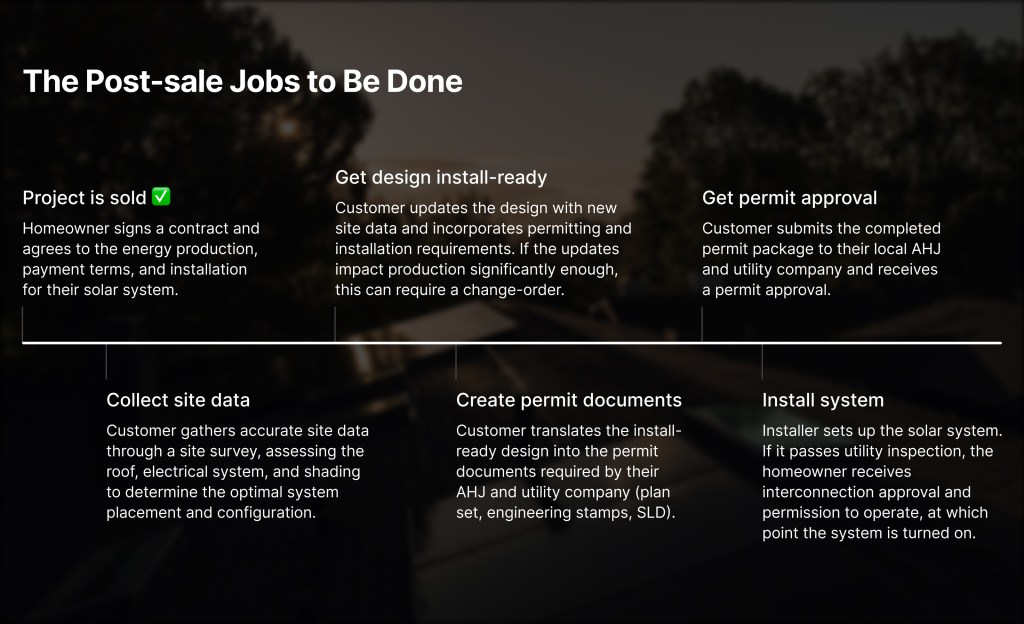
✨ Outlining the Jobs To Be Done
Our discovery efforts focused on identifying the various Jobs to be Done in this workflow to better understand the needs and motivations of our customers. This careful analysis helped us capture key customer expectations and allowed us to prioritize features that truly mattered to them. By mapping out each stage of the user journey, we gained useful insights that guided our decisions at every step. This framework helped us avoid creating a bloated MVP with unnecessary features, ensuring we delivered a product that effectively addressed customer pain points and improved their experience. Ultimately, this approach led to higher customer satisfaction and a greater chance of long-term engagement with our solution.
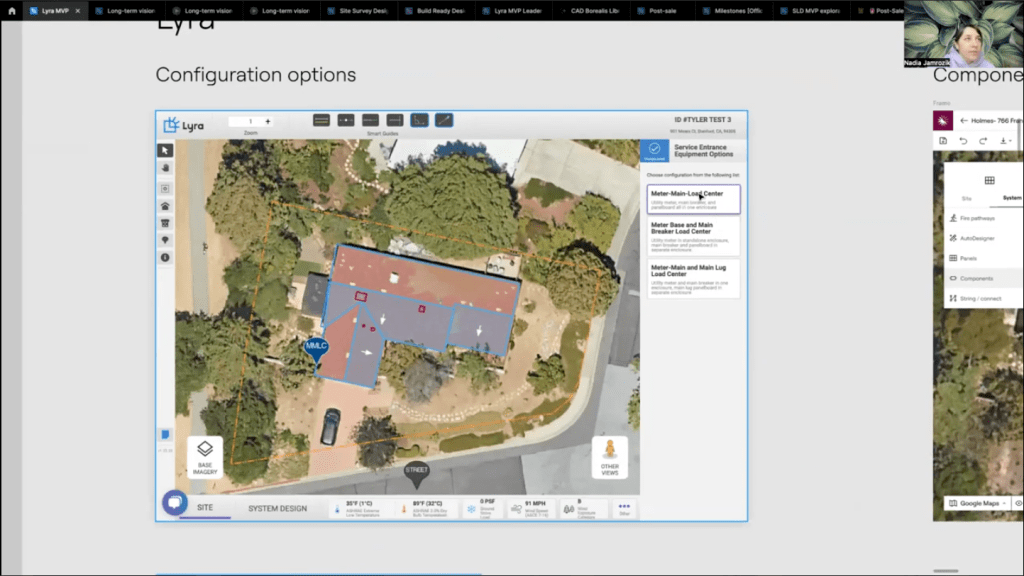
👟 Conducting due-diligence interviews with current Lyra customers
I led the team in conducting and analyzing 15 interviews with current Lyra customers to understand 1. if the acquisition was viable and 2. what product gaps and value propositions existed. This process included gathering qualitative insights and identifying patterns that provided our team with a clear view of customer satisfaction and needs. We presented an overview of customer demographics, needs, behaviors, and goals to the company, showcasing the varied backgrounds of our customers and how their experiences influence their use of the Lyra product.
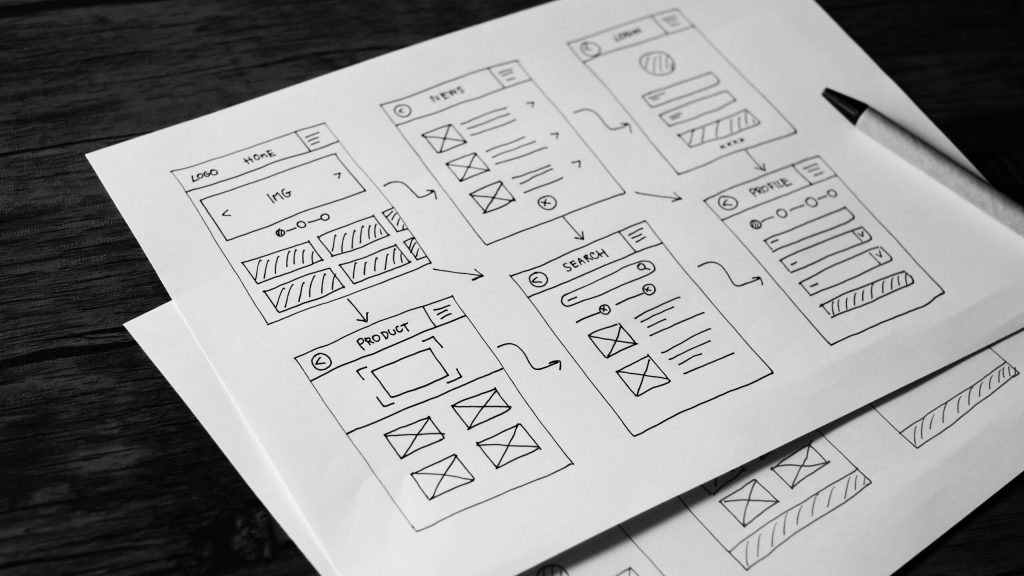
🤲🏽 Sketching our solution vision together
We outlined our vision goals, assumptions, and requirements, and created a clear plan to achieve the impact we wanted. This careful process included looking at the current situation as well as identifying possible challenges and opportunities. Now that everyone was informed and on the same page, our next step was to gather ideas from all team members, encouraging creativity and innovation. By welcoming different viewpoints of engineering, product, sales, customer support, and design, we ensured that the solutions we developed would meet the needs of our audience.
We created a small beta testing group, made up of Aurora & Lyra customers, to help us understand how the MVP was really performing in the day-to-day.
“The first time I completed an instant plan set, I had to go back to the demo video to find where things were located or I would have to kind of click around a little bit to find that exact place [to complete the task].”
Benji
Earth Right Mid-Atlantic (IPS Early Access Customer)
“Lyra has some steps pre-established. In Lyra, we can follow those steps, but in Aurora it’s more like my own work. In Aurora, it is not like something established – It’s like the design part is also for any person, for any user. ”
Francisco
Equity Solar (IPS Early Access Customer)
Looking forward:
creating the 1-year vision
After iterating on the MVP we made space for visionary work to align the team, stakeholders, customers, & Aurora leadership on where the product was headed.
We also needed to consider additional constraints with the 1-year vision:
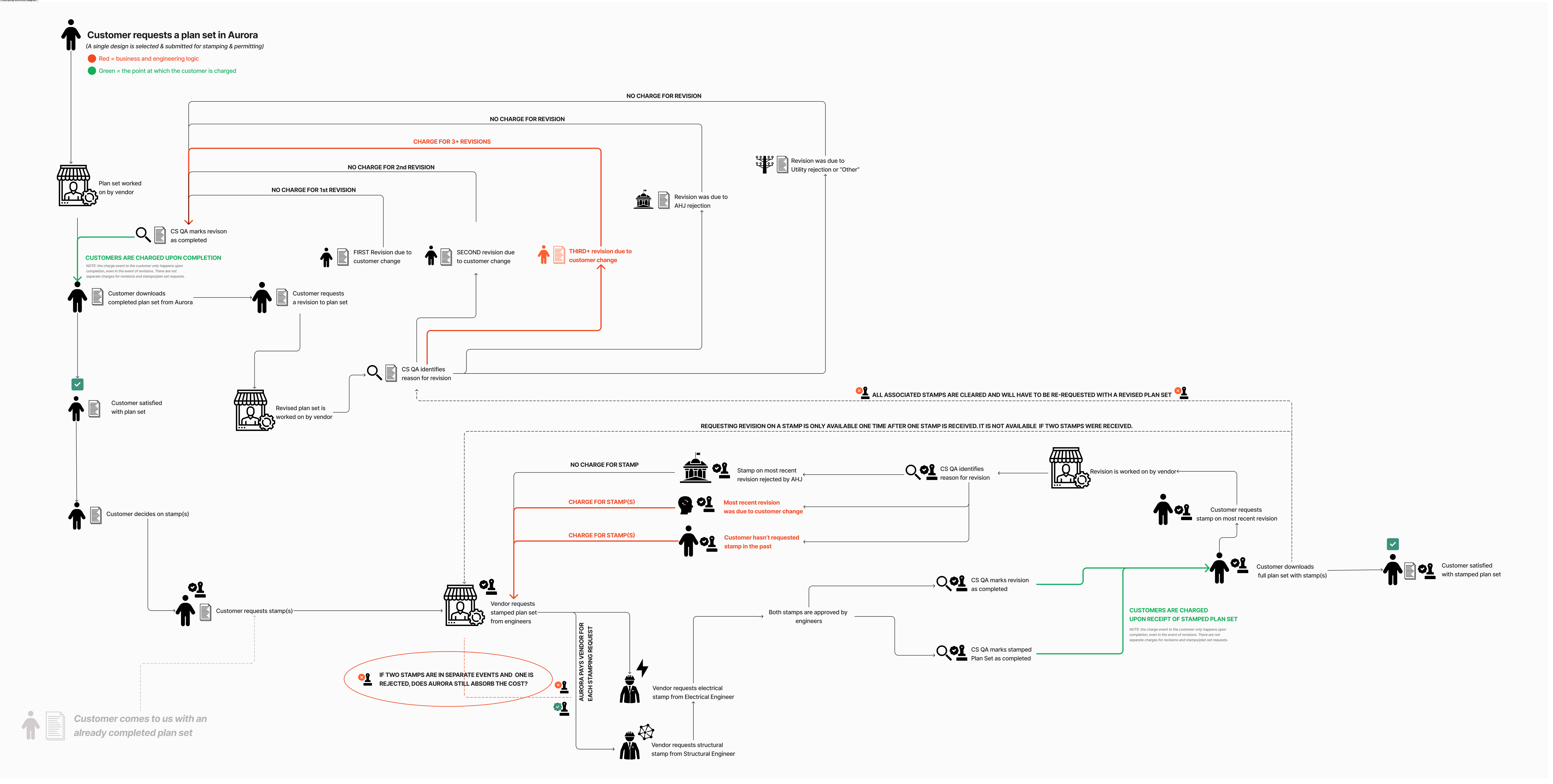
- How will the user order a Plan Set via our white-glove service vs create their own Instant Plan Set? How will these products and services fit together in the long-term?
- How will we internationalize this work and how does it intersect with the Single Line Diagram requirements of the German market we were targeting?
- How might the post-MVP offering fit into our desire as a company to expand into O&M (operations and maintenance) tooling?
- How do change orders (production changes to the design, sometimes requiring re-contracting) fit into the instant plan set vision design process?
- Lo-fidelity wireframes quickly in Figma utilizing the Aurora Design System
The current Aurora UX offered full flexibility for varied workflows whereas Lyra provided a linear, constrained workflow. Which would our customers prefer? The customer validated answer? Combining experiences into a hybrid of both worlds!
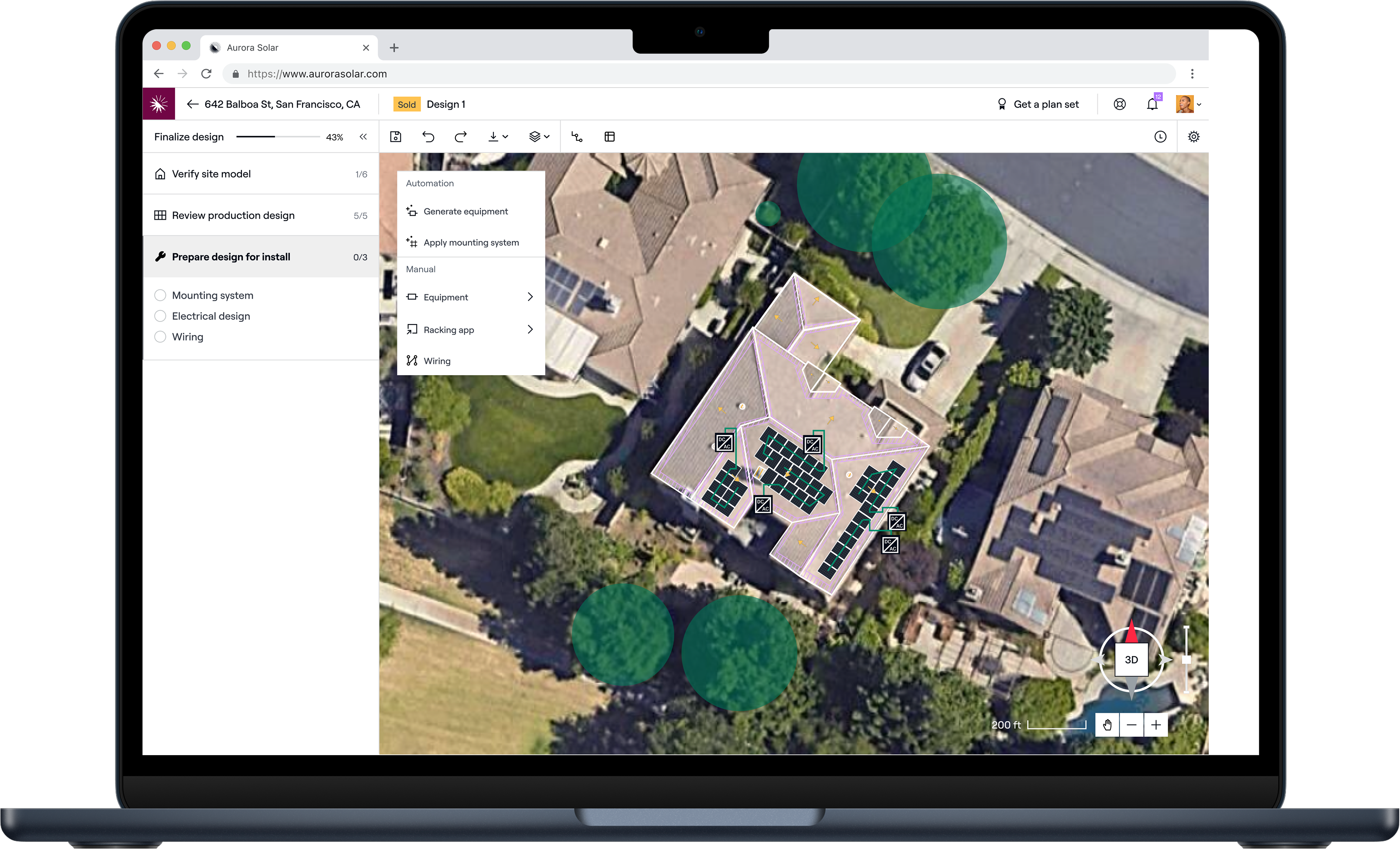
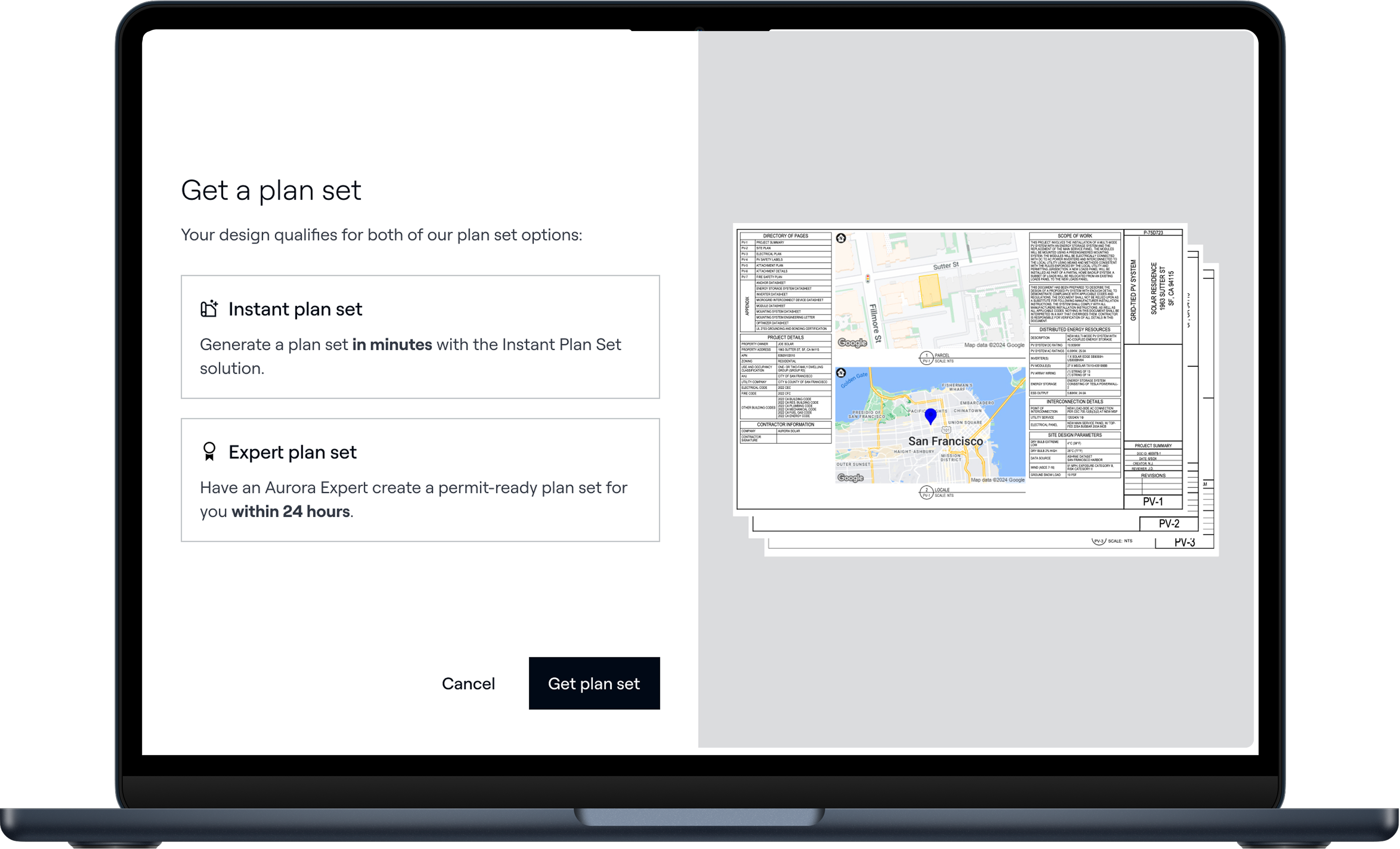
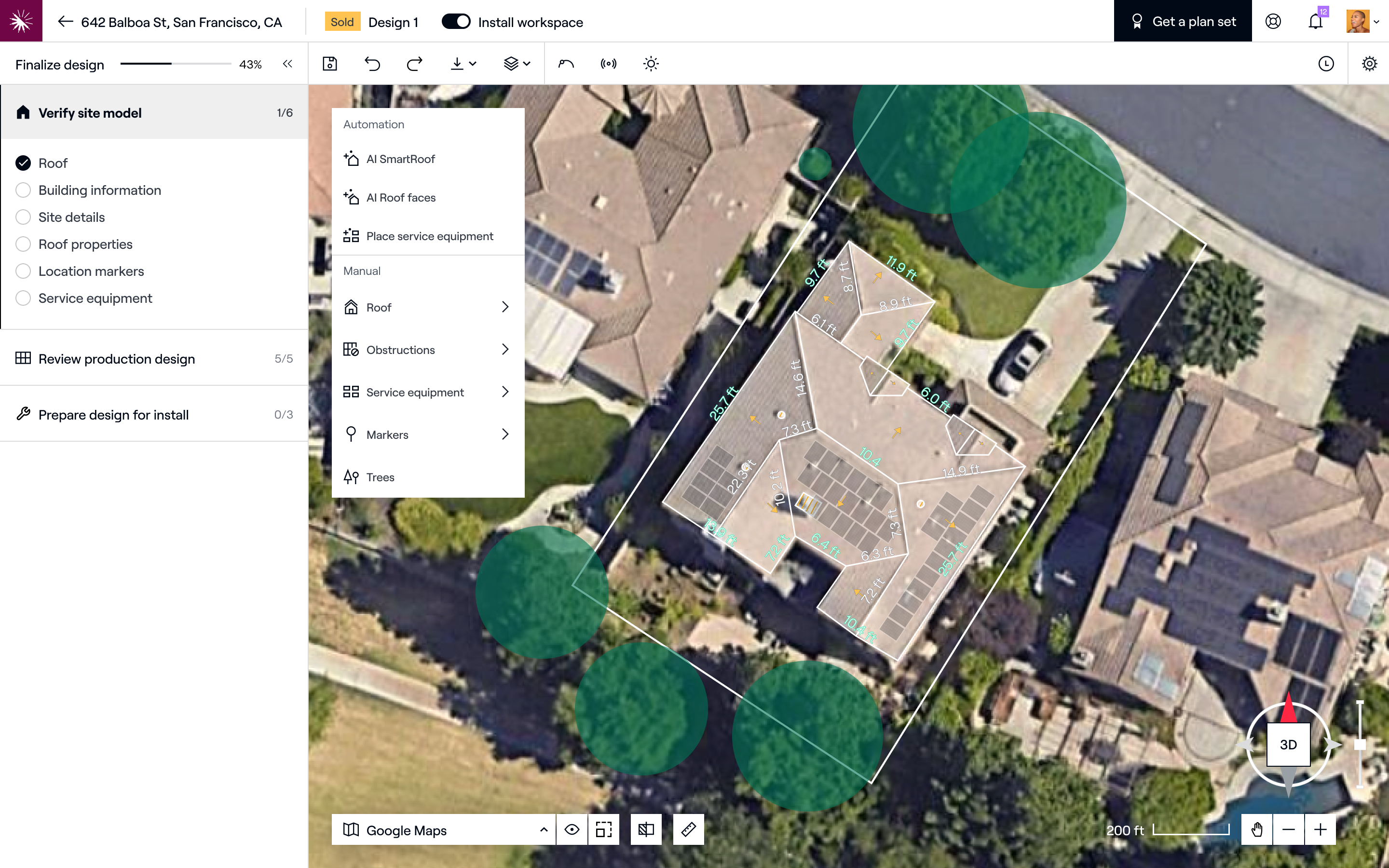
The answer we discovered through our prototypes? A hybrid of both!
“This (step-guided tool) would have been fantastic when we first started out, but once I get ideas and I understand how the software works and the concepts behind designs, I do personally like a little bit more flexibility.”
— Benji · Earth Right Mid-Atlantic (IPS Early Access Customer)
Resulting business & customer impact
$107M
Total addressable market (TAM), split 50/50 for self-serve & white-glove solutions
$25M
Additional revenue obtained with MVP, & high likelihood of growth with additional regulation coverage.
35%
Overall reduction in task time to completion of the Plan Set package.
Takeaways & learnings
It’s my philosophy that every project and experience has something to teach us. No matter the expertise or experience of the person, there is always something to learn and take away from a project that could be done better or differently next time. There’s also always things done well that should be done and re-applied for the next project as well! Here’s a few of those reflections for the Aurora + Lyra integration project:
🏆 Things we did well
- We started with a small release and reduced risk to business by conducting a beta phase.
- We were able to roll back on issues very quickly, as soon as they were identified.
- Incorporating stakeholders early and often to get feedback and buy-in.
- Working very closely with existing Lyra customers and generally taking a HCD (Human Centered Design) approach.
🧐 Things we could have done better
- Conducted a pre-mortum 1-2 weeks before release to the beta testing group.
- Tight timelines lead to unnecessary sense of urgency, and stress for the team. Unfortunately these were mostly self-imposed deadlines.
- Incorporated additional feedback from Lead Product Designers & Lead Product Managers from pods in different areas of the Aurora product.
- Additional proactive communication to team and leadership of risks to timeline and/or beta delivery readiness.


Leave a Reply